特斯拉与谷歌最新财报 Tesla and Google's Latest Earnings Reports
你好,希望你今天一切都好。
Hello, hope you're having a great day.
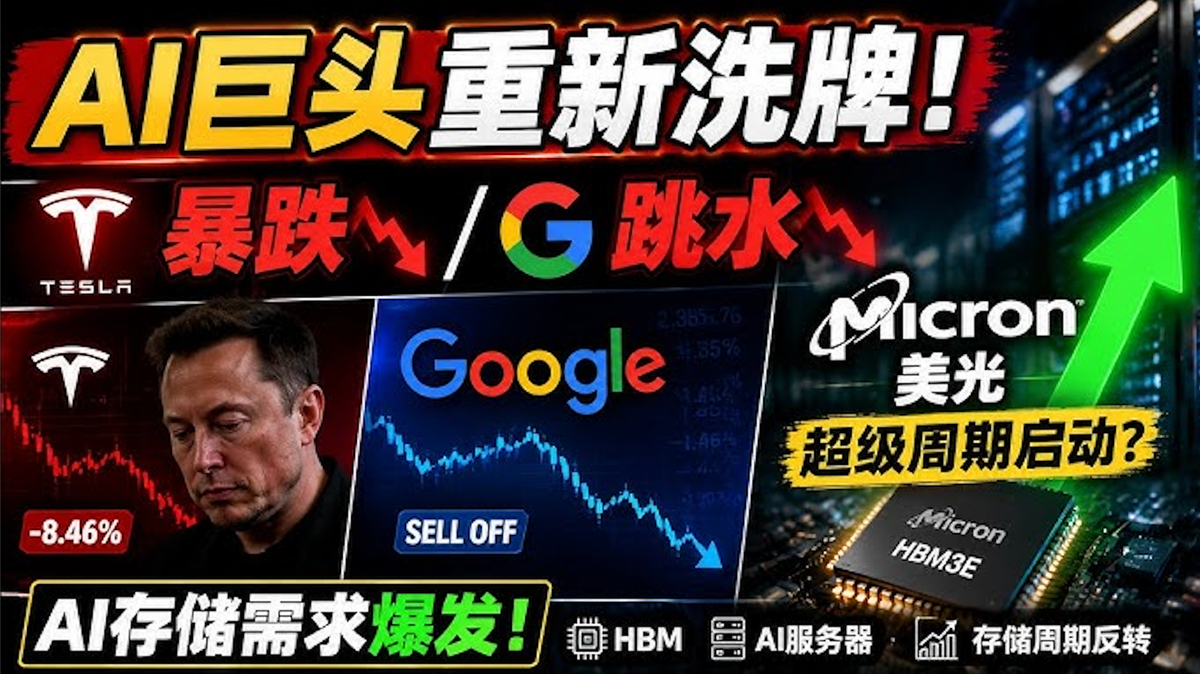
受特斯拉与谷歌最新财报影响,市场因担忧人工智能领域的资本支出而出现期货下跌。这种担忧站在了历史经验的对立面。
Futures pulled back this week following the latest Tesla and Google earnings, as the market grew anxious over AI capital spending. This anxiety runs counter to historical precedent.
谷歌本季度交出了AI周期中最强劲的表现之一:云业务收入同比增长82%,营业利润率达到36%。但市场的焦点却集中在三个月内资本开支增加150亿美元、预计2027年将进一步上升,以及短期内需要依赖成本更高的第三方算力这几个因素上。这笔支出导致公司季度自由现金流20多年来首次转负,掩盖了其他方面同样出色的运营表现。
Google just delivered one of its strongest quarters of the AI cycle, with cloud revenue up 82% year-over-year and operating margin reaching 36%. Yet the market's attention has fixated on capex rising $15 billion in three months, further increases expected into 2027, and a near-term reliance on costlier third-party compute capacity. That spending pushed quarterly free cash flow negative for the first time in over two decades, overshadowing otherwise excellent operating results.
谷歌($GOOGL)Q2财报亮点:总收入同比增长24%;搜索及其他广告业务同比增长17%;谷歌云同比增长82%,积压订单达5140亿美元;1P模型API处理量达到每分钟220亿个token,高于上季度的160多亿;YouTube广告收入同比增长13%;Gemini App月活跃用户达9.5亿。
Google ($GOOGL) Q2 highlights: total revenue up 24% year-over-year; Search and other advertising up 17%; Google Cloud up 82%, with a $514 billion backlog; 1P model API throughput reached 22 trillion tokens per minute, up from over 16 trillion the prior quarter; YouTube advertising up 13%; Gemini App monthly active users reached 950 million.
谷歌目前是全球盈利能力最强的公司之一,年净收入达2400亿美元。它也是人工智能经济中少数拥有全栈能力的企业——自研TPU芯片、Gemini模型、云基础设施、搜索与YouTube分发渠道,以及应用层面的Waymo。
Google is currently one of the most profitable companies in the world, with annual net income of $240 billion. It's also one of the few companies in the AI economy with full-stack capability — proprietary TPU chips, the Gemini model family, cloud infrastructure, Search and YouTube distribution, and Waymo at the application layer.
由于人工智能支出激增,谷歌出现了20多年来首次自由现金流为负的情况。但这些支出已经在业绩上体现:云收入达250亿美元,营业收入增长超过三倍至90亿美元,利润率扩大到36%,积压订单攀升至5140亿美元。Alphabet正日益成为一家垂直整合的AI基础设施公司,但需要先完成基础设施建设的资金投入,才能兑现现金流回报。
The surge in AI spending has pushed Google's free cash flow negative for the first time in over 20 years. But that spending is already showing up in results: cloud revenue reached $25 billion, operating income more than tripled to $9 billion, margins expanded to 36%, and the backlog climbed to $514 billion. Alphabet is increasingly becoming a vertically integrated AI infrastructure company — but it must fund the infrastructure buildout before it can harvest the cash flow.
这一模式并不新鲜。变革性技术在实现盈利之前,往往需要大量前期投入——本质上是在为日后的回报打基础。计算机和互联网都曾经历漫长的阶段,才真正体现在企业生产力、收入与利润的统计数据中。诺贝尔经济学奖得主罗伯特·索洛提出的"索洛悖论"曾指出,计算机技术"无处不在,却唯独没有出现在生产力统计数据中",人工智能大概率会遵循同样的路径。仅凭早期阶段的表现下结论,会忽略网络效应自我叠加的规律,也无法阻止这项技术重塑各行各业——每一家企业最终都将面对适应、采纳或被淘汰的选择。
This pattern isn't new. Transformative technologies typically require heavy upfront investment before turning profitable — essentially laying the groundwork for later returns. Both computing and the internet went through long stretches before their impact showed up in measurable corporate productivity, revenue, and profit statistics. Nobel laureate Robert Solow's "Solow paradox" observed that computers were once "everywhere but in the productivity statistics" — AI is likely following a similar trajectory. Judging the technology solely by its early-stage results overlooks the compounding nature of network effects, and won't stop it from reshaping every industry; every business will eventually face a choice between adapting, adopting, or falling behind.
目前AI投资回报确实只集中在少数8%到12%的公司身上,但这与新技术发展的历史规律一致——铁路、蒸汽机车、电报、手机、电脑、互联网无一例外都经历过这一阶段。批评者常引用"56%的CEO报告称成本节约或收入增长为零"这一数据作为质疑依据,但这一数据本身并不能否定技术长期重塑经济的趋势。
Current AI ROI is indeed concentrated in a narrow band of companies — roughly 8% to 12% — but that's consistent with how new technologies have always played out: railroads, steam locomotives, the telegraph, mobile phones, computers, and the internet all went through the same phase. Critics often cite the statistic that "56% of CEOs report zero cost savings or revenue growth" from AI as grounds for skepticism, but that figure alone doesn't disprove the technology's longer-term potential to reshape the economy.