当所有人都在恐慌时,华尔街却在悄悄上调目标 Wall Street Is Quietly Raising Its Targets While Everyone Else Panics
你好,希望你今天一切都好。
Hello, hope you're having a great day.
今天大盘的关键支撑位大约在7560至7580点。如果这一带能够守住,接下来市场有望出现较低点位反弹(lower high)。与此同时,SOXL在80美元附近、SOXX在460美元附近的支撑依然顽强。团队认为,一旦油价升至每桶120至150美元区间,特朗普政府不会坐视不理——出于选票考量,他必然会想办法应对。数据显示,全美信用卡负债持续攀升,逾期率(delinquency rate)近几个月上升了13%,个人破产率也在同步走高。团队认为,美国表面的繁荣某种程度上只是一种错觉:外表光鲜的背后,实际上早已负债累累。如果利率继续上升,这将成为压垮美国普通民众的最后一根稻草,也正因如此,美联储对加息始终十分谨慎。此外,针对特朗普提出的向每位成年人发放5000美元的说法,团队认为这更像是一种安抚性质的承诺——回顾上一轮关税相关的2000美元支票,美国民众实际上并未收到退款,而美国国债规模已高达40万亿美元,这笔钱究竟从何而来,仍是一个悬而未决的问题。
Today's key market support sits around 7560–7580. If this level holds, we could see a lower-high style rebound from here. Meanwhile, SOXL's support near $80 and SOXX's support near $460 remain resilient. We believe that once oil prices climb into the $120–$150 per barrel range, the Trump administration won't simply stand by — with elections in mind, it will look for ways to respond. Data shows that national credit card debt keeps climbing, with delinquency rates up 13% over recent months, and personal bankruptcy rates rising in tandem. In our view, America's outward prosperity is, to some extent, an illusion — however shiny the surface, the reality underneath is heavy debt. If interest rates keep rising, that could be the final straw for ordinary Americans, which is exactly why the Fed remains so reluctant to hike. As for Trump's proposal to send $5,000 to every adult, we see this as more of a placating promise — recall that the earlier $2,000 tariff-related checks never actually materialized for the public, and with national debt already at $40 trillion, where this new money would come from remains an open question.
网络上目前正流传贝森特(Bessent)即将推出债券发行计划的消息。团队和许多人一样,希望这次能拿出真正切实可行的方案,而不是又一个容易被全球交易员迅速击垮的摇摇欲坠的提案。如果方案得当,这对股市将是利好,尤其是对近期被"打折"抛售的股票而言。团队始终认为,投资的关键在于专注,而不是被干扰——计划、执行、重复,这正是我们一贯坚持的策略。
Word is currently circulating online that Bessent is about to unveil a bond issuance plan. Like many others, we're hoping this turns into a genuinely workable proposal — not another shaky plan that global traders can quickly knock down. If it's well constructed, this should be good news for stocks, especially names that have recently been sold off at a "discount." As we've always said, the key to investing is focus, not distraction — plan, execute, repeat. That's the strategy we hold to.
市场能涨到多高?华尔街几家最大的银行近期纷纷上调了今年的标普500指数目标,尽管今年早些时候,其中不少银行还在争相警告金融世界末日即将来临。例如:高盛3月16日警告称,严重的石油冲击情景可能将标普500指数拖至5400点的熊市区域,较当时水平低约18%;摩根大通3月下调目标价,表示若经济衰退风险加剧,目标价可能回落至6000至6200点,当时石油冲击与战争担忧正主导新闻头条;Stifel当时表示,即便维持9%的基本上涨预期,一旦发生衰退,标普500指数仍可能迅速下跌20%;穆迪的Mark Zandi指出,随着油价飙升至每桶120美元附近,经济衰退的概率高达49%;美国银行的Michael Hartnett当时呼吁一次"可买入的洗盘",并表示只有当股价跌破6600点,他才会重新转为建设性看法;Polymarket预测市场当时给出的年底前衰退概率为50%,而高盛自身的预测概率仅为25%。另一方面,团队当时直言"混乱中蕴藏着机遇",并鼓励大家继续投资——希望你当时听从了这个建议。如今,汇丰银行刚将2026年底目标点位上调至8100点,较此前7650点的预测上调了5.9%。
How high can the market go? Several of Wall Street's largest banks have recently raised their S&P 500 targets for the year — even though earlier this year, many of the same banks were racing to warn that financial doom was near. For example: Goldman Sachs warned on March 16 that a severe oil-shock scenario could drag the S&P 500 down to 5400, bear-market territory roughly 18% below levels at the time. JPMorgan, in March, cut its target and said it could fall further to 6000–6200 if recession risk intensified, as oil shocks and war fears dominated headlines then. Stifel said earlier this year that even under a base-case 9% rally scenario, a recession could still send the S&P 500 down 20% quickly. Moody's Mark Zandi put the recession probability at 49% as oil surged toward $120 a barrel. Bank of America's Michael Hartnett called for a "buyable washout," saying he wouldn't turn constructive again unless stocks fell below 6600. Polymarket's prediction market put year-end recession odds at 50% at the time, versus Goldman's own 25% forecast. Meanwhile, we were saying plainly that "opportunity hides in chaos" and encouraging continued investing — we hope you followed that advice. Now, HSBC has just raised its year-end 2026 target to 8100, up 5.9% from its earlier forecast of 7650.
市场能涨到多高?华尔街几家最大的银行近期纷纷上调了今年的标普500指数目标,尽管今年早些时候,其中不少银行还在争相警告金融世界末日即将来临。例如:高盛3月16日警告称,严重的石油冲击情景可能将标普500指数拖至5400点的熊市区域,较当时水平低约18%;摩根大通3月下调目标价,表示若经济衰退风险加剧,目标价可能回落至6000至6200点,当时石油冲击与战争担忧正主导新闻头条;Stifel当时表示,即便维持9%的基本上涨预期,一旦发生衰退,标普500指数仍可能迅速下跌20%;穆迪的Mark Zandi指出,随着油价飙升至每桶120美元附近,经济衰退的概率高达49%;美国银行的Michael Hartnett当时呼吁一次"可买入的洗盘",并表示只有当股价跌破6600点,他才会重新转为建设性看法;Polymarket预测市场当时给出的年底前衰退概率为50%,而高盛自身的预测概率仅为25%。另一方面,团队当时直言"混乱中蕴藏着机遇",并鼓励大家继续投资——希望你当时听从了这个建议。如今,汇丰银行刚将2026年底目标点位上调至8100点,较此前7650点的预测上调了5.9%。
How high can the market go? Several of Wall Street's largest banks have recently raised their S&P 500 targets for the year — even though earlier this year, many of the same banks were racing to warn that financial doom was near. For example: Goldman Sachs warned on March 16 that a severe oil-shock scenario could drag the S&P 500 down to 5400, bear-market territory roughly 18% below levels at the time. JPMorgan, in March, cut its target and said it could fall further to 6000–6200 if recession risk intensified, as oil shocks and war fears dominated headlines then. Stifel said earlier this year that even under a base-case 9% rally scenario, a recession could still send the S&P 500 down 20% quickly. Moody's Mark Zandi put the recession probability at 49% as oil surged toward $120 a barrel. Bank of America's Michael Hartnett called for a "buyable washout," saying he wouldn't turn constructive again unless stocks fell below 6600. Polymarket's prediction market put year-end recession odds at 50% at the time, versus Goldman's own 25% forecast. Meanwhile, we were saying plainly that "opportunity hides in chaos" and encouraging continued investing — we hope you followed that advice. Now, HSBC has just raised its year-end 2026 target to 8100, up 5.9% from its earlier forecast of 7650.
没拿到政府支票的那家公司,或许才是真正值得关注的对象。D-Wave Quantum、Rigetti Computing和Quantinuum近期各自从美国商务部获得了根据《芯片法案》拨付的1亿美元资金,合计3亿美元,美国政府还在每家公司持有少数股权。
IonQ (IONQ)?一分未拿。事实上,就在同一天,IonQ将2026年营收预期从2.8亿至2.9亿美元上调至4.5亿至4.6亿美元,并发布了新一代平台Superion 256,目前已开始接收2027年交付的订单。
由此可见:政府资金往往流向那些需要外部背书和资金支持、自身实力不够的公司。想想Solyndra、Fisker和A123的先例吧。多数投资者恐怕会在这一点上判断失误。华盛顿给出的1亿美元支票,本质上是一根伪装成"信心投票"的救命稻草。即便经历了今天的上涨,D-Wave和Rigetti今年迄今跌幅仍超过25%。反观IonQ,不仅上调了业绩指引,还在为尚未问世的硬件——许多竞争对手连产品路线图甚至PPT里都还没有的硬件——接受客户订单。可以说,多数投资者即便把"量子"仓位翻倍,恐怕仍然不够。团队的投资建议是:买最好的,忽略其余的。希望你的投资组合里也已经配置了至少一只优质的量子标的,就像OBA Family一样。在团队看来,量子计算的"ChatGPT时刻"正比以往任何时候都更接近。如果历史可以作为参考,接下来发生的事情很可能会让不少人感到意外。
The company that didn't get a government check might be the one worth watching. D-Wave Quantum, Rigetti Computing, and Quantinuum each just landed $100 million from the Commerce Department under the CHIPS Act — $300 million total — with the government taking a minority equity stake in each.
IonQ (IONQ)? Zero. In fact, on that very same day, IonQ raised its 2026 revenue guidance from $280–290 million to $450–460 million, and unveiled its next-generation Superion 256 platform, which is already taking orders for 2027 delivery.
The takeaway: government money tends to chase companies that need outside validation and deep pockets because they don't have the game to stand on their own — think Solyndra, Fisker, and A123. Most investors will likely get this wrong. A $100 million check from Washington is essentially a lifeline dressed up as a vote of confidence. D-Wave and Rigetti are both still down more than 25% this year, even after today's pop. IonQ, by contrast, raised guidance and is already taking customer orders for hardware that doesn't yet exist in most competitors' roadmaps — let alone their slide decks. Most investors could double their "quantum" exposure and still not have enough shares. Our take: buy the best, ignore the rest. We hope you already have at least one solid quantum name in your portfolio, the way the OBA Family does. In our view, quantum computing's "ChatGPT moment" is closer than ever. If history is any guide, what happens next may catch quite a few people off guard.
ARM(浮动利率抵押贷款)正在回归,但并非因为大家真的喜欢它。上周ARM申请量占抵押贷款总活动的比例升至8.5%,高于前一周的8%,创下自6月以来的最高占比。相比之下,在疫情最深的阶段,由于固定利率极低,ARM需求占比仅约3%。目前30年期固定利率均值已升至6.85%,为一年多以来最高水平,而5年期ARM利率反而降至5.82%。购房者的选择很直接:追逐眼下更低的数字,把利率重置的问题留到以后再说。
但ARM并非免费的午餐,它其实是一场赌注,风险远比多数人以为的要大。真正的故事往往藏在标题之外——这正是团队所说的"背页法则"。上周再融资申请量下降6%,较一年前的水平低了整整25%,创下去年5月以来最慢的节奏。没有人会在利率变差的情况下选择再融资,因此再融资活动的萎缩,几乎已经说明了目前利率水平的真实情况。购房者并没有被吓退,只是在支付方式上变得更有创意。(值得一提的是,这背后其实是许多人正承受实际压力,这一点确实值得关注,团队会在未来另作讨论。)
从投资角度看,那些能够为购房者提供自有融资补贴的建筑商,将比无法这样做的同行更具优势——团队更看好D.R. Horton(DHI)这类拥有自有抵押贷款业务、能够持续为利率提供补贴的公司;而对于像KB Home(KBH)这类主要依赖直接降价促销的公司,团队则保持谨慎或回避态度,因为这类做法往往意味着其利润空间可能比表面看起来更薄。
ARMs are making a comeback, but not because anyone actually loves them. ARM applications climbed to 8.5% of total mortgage activity last week, up from 8% the week before — the highest share since June. Compare that to the depths of the pandemic, when ultra-cheap fixed rates kept ARM demand at barely 3%. The average 30-year fixed rate has now hit 6.85%, the highest in over a year, while 5-year ARM rates actually dropped to 5.82%. Buyers are doing exactly what you'd expect: chasing the lower number today and leaving the reset to deal with later.
But ARMs aren't free money — they're a bet, and a riskier one than most people realize. The real story usually sits beyond the headlines, which is what we call the "Rule of the Back Page." Refinance applications fell 6% last week and now sit a full 25% below year-ago levels, the slowest pace since last May. Nobody in their right mind refinances into a worse rate, so this drop-off in refi activity tells you almost everything you need to know about where rates actually stand. Buyers aren't running scared — they're just getting creative about how they pay. (It's worth noting this reflects real strain for a lot of people, which is a topic worth its own discussion down the line.)
From an investing standpoint, homebuilders that can subsidize their own financing have an edge over those that can't. We favor names like D.R. Horton (DHI), which has its own captive mortgage arm and can keep subsidizing rates. We'd stay cautious on or avoid names like KB Home (KBH), which appears to be leaning mainly on straight price cuts — historically a sign that its margin cushion may be thinner than it looks.
苹果的重大发布会,今天会是那一天吗?是关于可折叠手机,还是新款Apple Watch,又或是与人工智能相关的消息?团队会持续关注。与此同时,尽管发布日后通常会出现"利好出尽"式的短期回调,苹果股价在重大发布日之后往往表现良好。据美国银行分析师Wamsi Mohan统计,自2007年智能手机时代开启以来,苹果股价在iPhone发布后的60天内上涨了17次,其中最大涨幅出现在2019年iPhone 11发布后的60天内,涨幅达20%。团队的研究显示,发布后最初的上涨(如果出现的话)往往比30至60天后的后续走势消退得更快,尤其是在涨价或供应限制等消息已被市场提前消化的年份更是如此——这也是团队一贯建议采取更谨慎、胜率更高策略的原因:其一,低价挂单在这种情形下往往效果不错;其二,如果发布会后出现回调、波动率飙升,卖出现金担保看跌期权既能带来一定收入,又能提供较高的入场胜率。
Apple's big announcement — will today be the day? A foldable phone? A new Apple Watch? Something AI-related? We'll be watching closely. That said, even though there's often a short-term "sell the news" pullback after launch days, Apple stock has historically performed well following major announcements. According to Bank of America analyst Wamsi Mohan, since the smartphone era began in 2007, Apple shares have risen in the 60 days after an iPhone launch 17 times, with the biggest gain — 20% — coming in the 60 days after the iPhone 11 launch in 2019. Our own research shows that the initial pop, if there is one, tends to fade faster than the follow-through over the next 30–60 days, especially in years when price hikes or supply constraints are already priced in — which is why we generally recommend a more cautious, higher-probability approach: first, low-priced limit orders can work well here; second, if a pullback with rising volatility follows the announcement, selling cash-secured puts can generate income while also offering a higher-probability entry point.
Palantir刚刚宣布Nebius成为其首选的自主人工智能基础设施合作伙伴。关键在于:这是团队目前见过的第一个真正把"数据与模型"和"算力与推理"两端,纳入同一边界之下的合作方案版本。换句话说,Palantir与Nebius这两家公司,在一份原本只是软件层面的合作公告中,加入了物理层面的限制条件。在团队看来,这正是那些只关注头条新闻的交易者容易忽略的细节,而聪明的投资者迟早会将其合理定价——从目前的市场反应来看,市场似乎也已经开始印证这一点。
对Palantir而言,这几乎是最理想的结果:无需编写任何新的AIP代码就能增强自身模型能力,既获得了理想的分发渠道,又顺带解决了算力和电力方面的问题。对Nebius而言,这是企业合同层面真实存在的需求,而不只是"GPU短缺"式的新闻话题。
没有物理隔离的"自主权",本质上只是一种投资层面的角色扮演——如果底层的芯片依然运行在别人的资产负债表上、别人的机房里、由别人的电网合同供电,那么声称自己掌控着模型、数据或算力,其实意义有限。你可以披上这层"自主"的外衣,宣称数据永远不会离开自己的掌控,但真正的自主运营,需要掌握电力、推理能力和机架空间这些物理层面的约束条件,否则本质上仍是在别人的牧场上放牧。
另外值得关注的一点是:Palantir这次很可能做了Anthropic和OpenAI最担心的事——宣布将把整套能力作为一个整体来出售。团队相信这会引起不少重要企业高管的关注,他们私下里已经表达过相当合理的担忧,即把自身全部知识产权投入由"别人"运营的前沿模型之中。团队也认为,这项业务的价值可能高达数十亿美元,这并非夸张——重要的是,可能还需要一两个季度才能真正转化为盈利,而一旦实现盈利,其影响将十分可观。
Palantir just announced Nebius as its preferred autonomous AI infrastructure partner. Here's the key point: this is the first version of this kind of proposal we've seen that genuinely merges the data-and-model side with the compute-and-inference side under a single boundary. In other words, Palantir and Nebius have folded physical-world constraints into what would otherwise have been a purely software partnership announcement. In our view, that's exactly the kind of detail that headline-chasing traders tend to miss, while sharper investors will price it in over time — and based on how the market is reacting, it already seems to be doing so.
For Palantir, this is close to ideal: it enhances its models without writing any new AIP code, gets the distribution it wants, and offloads someone else's chip-and-power problem in the process. For Nebius, this represents real enterprise-contract demand, not just a "GPU shortage" headline.
"Sovereignty" without physical isolation is essentially investing role-play — claiming control over your model, data, or compute means little if the underlying silicon still runs on someone else's balance sheet, in someone else's building, powered under someone else's grid contract. You can wear that "autonomy" label and say your data never leaves your control, but genuine autonomous operation requires control over the physical constraints — power, inference capacity, and rack space. Otherwise, you're essentially grazing on someone else's ranch.
One more thing worth considering: Palantir may have just done what Anthropic and OpenAI feared most — announcing it will sell the entire stack as a bundle. We believe this will get the attention of a number of major corporate executives, who have privately voiced real — and, in our view, reasonable — concerns about handing all of their intellectual property to frontier models run by "someone else." We also think this business could be worth billions, and that's not an exaggeration — though it may take a quarter or two before it actually turns profitable. Once it does, the impact could be significant.
IonQ迎来重大新闻日。系好安全带——IonQ今天一口气发布了团队见过的最密集的一批消息,而且方向高度一致:巨大的盈利潜力,而华尔街目前尚未充分意识到这一点。
先说资金层面:在7月31日完成对SkyWater Technology的收购后,IonQ已将2026年全年营收预期上调至4.5亿至4.6亿美元。首席执行官Niccolo de Masi表示,这证明了"公司量子平台的市场吸引力",以及SkyWater为公司带来的制造规模优势。在团队看来,拥有自有芯片代工厂,而非租用别人的产能,这是一种截然不同、且完全站得住脚的商业模式,利润空间也相当可观。
同一天,IonQ发布了第六代量子计算平台Superion 256,这是首个基于SkyWater内部自产芯片打造的平台,意味着IonQ在不到一年时间内,就从设计阶段推进到能够在原型系统中捕获离子,并已开始接收面向2027年交付的客户订单。
此外,公司安全业务当天也取得了两项独立进展。其一,IonQ与Congruity360签署了一份价值818万美元的协议,用于构建量子安全数据保护系统,这是目前美国规模最大的商业量子安全协议之一——这是实实在在的收入,不是试点项目,更不只是PPT演示,且与白宫一项将联邦政府后量子安全防护期限提前至2030年的行政命令直接相关。其二,IonQ发布的研究显示,一台假设拥有2万个量子比特的机器,理论上可以在约26天内破解比特币背后的椭圆曲线加密算法(团队提醒,这仅是资源层面的理论测算,并非实际可行的攻击方案)。团队认为,这项研究说明IonQ的全栈方案,在应对各国政府和企业正竞相准备的"未来"量子威胁方面,已领先竞争对手数年,而部分竞争对手虽然声称也在应对这类威胁,但目前所拥有的,恐怕仍只是纸面计划。
IonQ just had a major news day. Buckle up — today IonQ released one of the densest clusters of news we've seen from the company, and every piece points in the same direction: significant earnings potential that Wall Street hasn't fully caught up to yet.
Starting with the money: after completing its acquisition of SkyWater Technology on July 31, IonQ raised its full-year 2026 revenue guidance to $450–460 million. CEO Niccolo de Masi said this reflects "the market appeal of our quantum platform" as well as the manufacturing scale SkyWater now brings. In our view, owning your own chip fab instead of renting someone else's production time is a fundamentally different — and fully justified — business model, with meaningfully better margins to boot.
The same day, IonQ unveiled its sixth-generation quantum computing platform, Superion 256 — the first platform built on chips manufactured in-house at SkyWater. That means IonQ has gone from the design stage to capturing ions in prototype systems in under a year, and is already taking customer orders for 2027 delivery.
The company's security business also scored two separate wins that same day. First, IonQ signed an $8.18 million agreement with Congruity360 to build a quantum-secure data protection system — one of the largest commercial quantum-security agreements in the US to date. This is real revenue, not a pilot project or a flashy slide deck, and it's directly tied to a White House executive order moving up the federal government's post-quantum security deadline to 2030. Second, IonQ published research showing that a hypothetical 20,000-qubit machine could theoretically crack the elliptic-curve cryptography behind Bitcoin in roughly 26 days (worth noting: this is a theoretical resource estimate, not a practical attack). In our view, this exercise shows that IonQ's full-stack approach is years ahead of the "future" quantum threats that governments and enterprises are now racing to prepare for — while some competitors claim to be addressing these threats but, for now, appear to have little more than plans on paper.
伊朗局势持续恶化,美加贸易紧张关系升温,加上市场担忧美联储可能为抑制通胀而加息,共同推动油价上涨。团队和许多人一样,真正关心的问题在于:全球收益率上升,究竟反映的是好于预期的经济增长,还是高于预期的通胀,又或者是一场迫近的债务危机——实际上答案只有这三种可能。团队目前更倾向于第一种:经济增长有望好于预期,尽管今天的抛售在很大程度上仍是市场对美联储动向及通胀前景担忧的反应。
请记住每件事背后的含义:标普500成分股公司公布了自2021年以来最强劲的盈利增长,第二季度利润同比平均增长40%,营收也实现两位数增长,业绩超预期的幅度创下多年新高,这已是连续第12个季度实现盈利增长。所以,团队的建议是:不要理会那些只担心"可能"发生什么的经济学家、评论员和夸夸其谈者,而应把注意力放在"更可能"发生的事情上。企业会公布真实的盈利情况、盈利时点和实现方式;而经济学家和分析师给出的更多只是观点——即便他们从未在相关公司任职,从未真正参与过产品研发,甚至在多数情况下,也从未真正管理过资金。
收益率上升确实会降低市场对未来利润的现值估值,这对高增长科技股尤其构成风险;但如果收益率上升的原因是经济走强、盈利增长,那么对股市的"伤害"往往有限——波动会更大,但实际影响可控。多年前,一位前辈曾反复提醒团队:最好的价格和最大的盈利潜力,往往出现在所有人都已经放弃希望的时刻。在今天这样早盘市况低迷、新闻标题令人沮丧,而企业盈利却从未如此强劲的情况下,这句话尤其值得铭记。
The deteriorating situation in Iran, rising US–Canada trade tensions, and market concerns that the Fed may raise rates to fight inflation are together pushing oil prices higher. Like many others, what we really want to know is whether rising global yields reflect better-than-expected growth, higher-than-expected inflation, or a looming debt crisis — realistically, those are the only three possibilities. Our current read leans toward the first: growth likely to come in better than expected, even though today's selloff is largely a reaction to Fed-related concerns and inflation worries.
It's worth remembering what everything actually means here: S&P 500 companies just reported their strongest earnings growth since 2021, with average year-over-year Q2 profit growth of 40%, double-digit revenue growth, and beat rates at multi-year highs — the 12th consecutive quarter of earnings growth. So our advice is simple: ignore the economists, commentators, and pundits worrying about what "might" happen, and focus instead on what's actually likely to happen. Companies report their real earnings, timing, and results; economists and analysts mostly offer opinions — even though many have never worked at the companies in question, never been involved in building a product, and in most cases, have never actually managed real money.
Rising yields do lower the present value of future profits, which is a particular risk for high-growth tech stocks. But when rising yields stem from a stronger economy and growing profits, the "damage" to stocks tends to be limited — more volatility, but manageable impact. Years ago, a mentor repeatedly reminded us that the best prices and the biggest profit potential tend to show up exactly when everyone else has given up hope. That's especially worth remembering on a morning like this one — a grim tape, discouraging headlines, and corporate earnings that have rarely been stronger.
标普500指数的200日移动平均线——大致可理解为一条追踪市场潜在趋势的平滑曲线——已经连续上涨329个交易日,这是过去十年中第四长的连涨纪录。这意味着什么?根据Kobeissi Letter的数据,自1999年以来,当这条均线处于上升趋势时,标普500指数的年化平均回报率约为8.5%;而当它处于下降趋势时,年化平均回报率仅约为0.1%。合理布局投资,你的投资组合会感谢你——选对策略,往往能带来完全不同的结果。
The S&P 500's 200-day moving average — essentially a smoothed line tracking the market's underlying trend — has now risen for 329 consecutive trading days, the fourth-longest such streak in the past decade. What does that mean? According to the Kobeissi Letter, since 1999, when this line has been rising, the S&P 500's average annual return has been about 8.5%; when it's been falling, the average annual return has been roughly 0.1%. Invest sensibly — your portfolio will thank you. The right strategy makes a real difference.
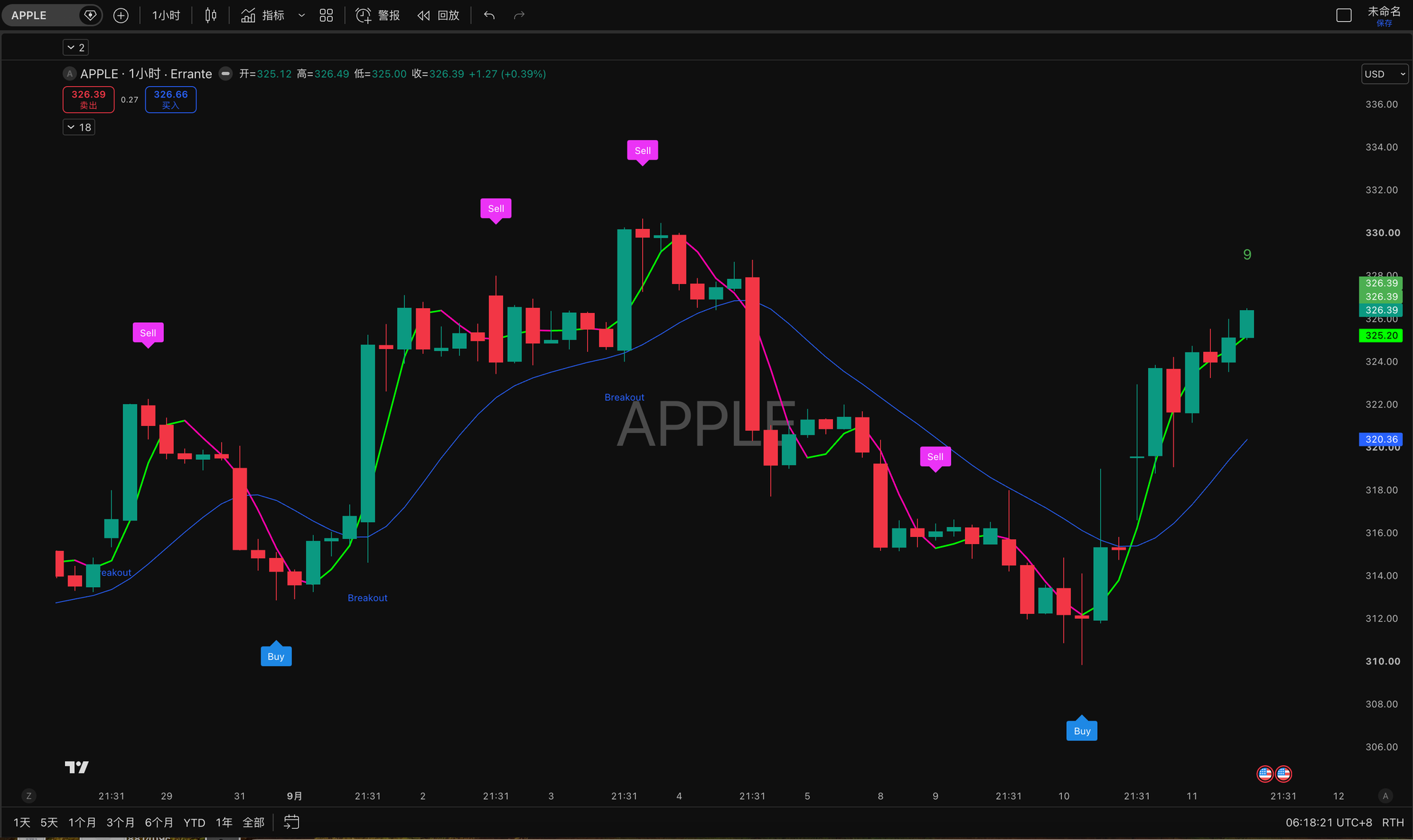
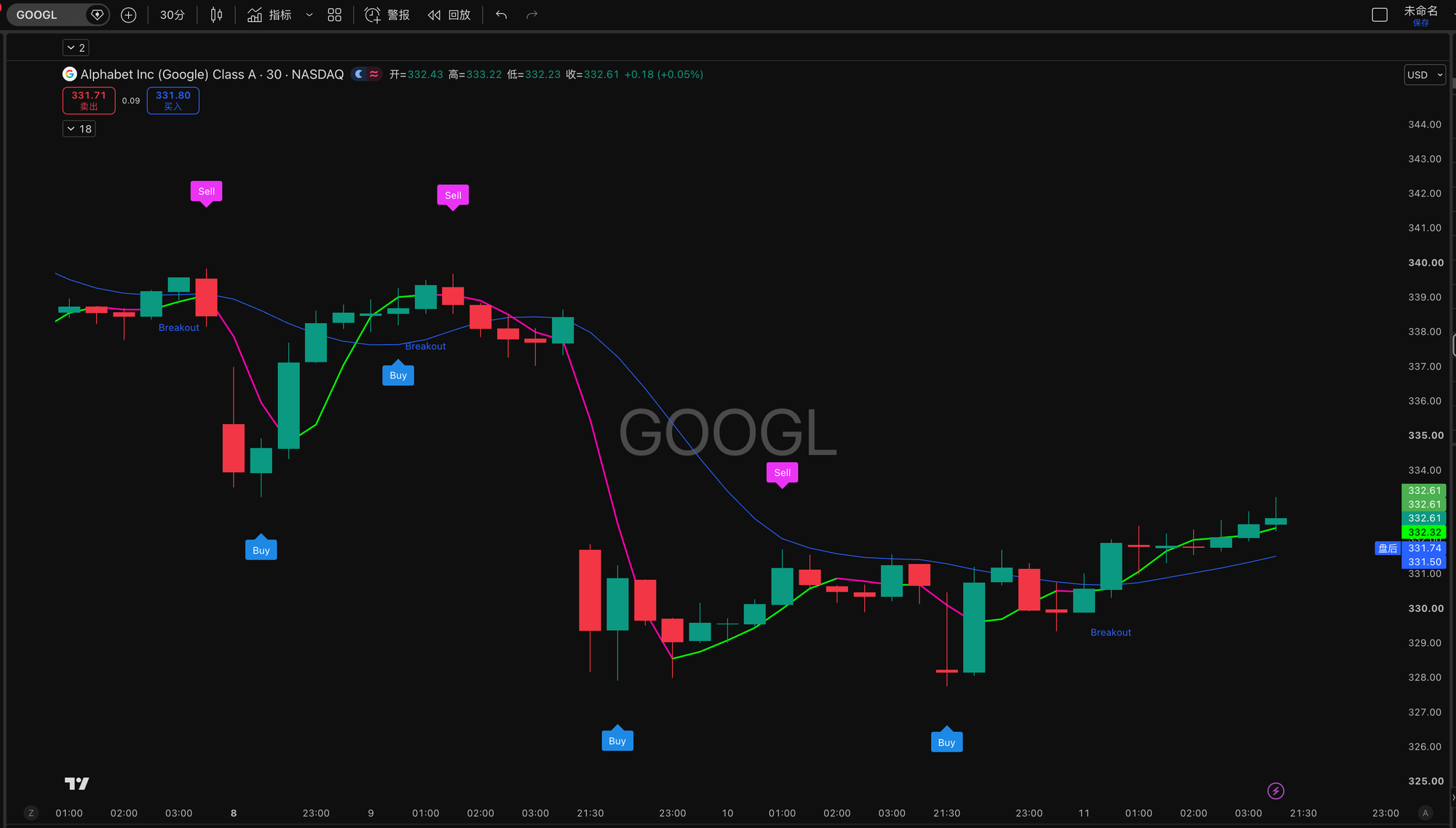
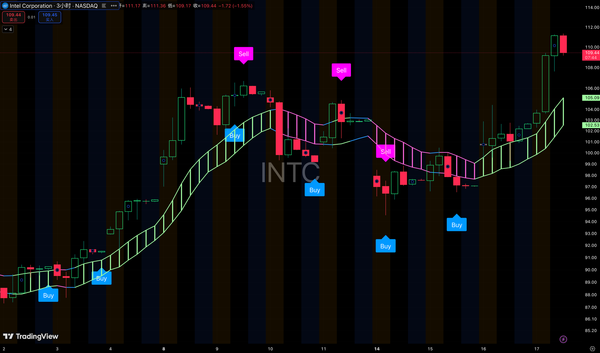
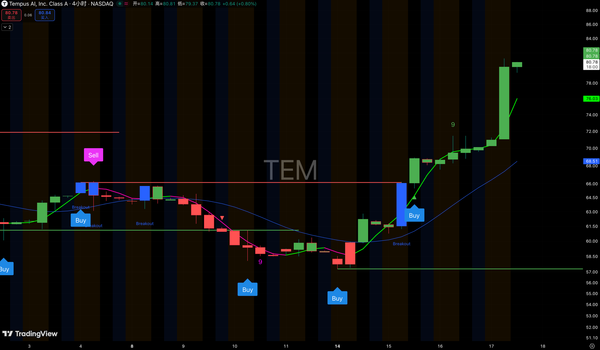
市场震荡,两日涨、两日跌,反复横盘震荡。会员利用我们的「买卖讯号交易指标系统」,精准捕捉多只股票的反转行情。
近期市场波动明显,呈现出两天上涨、两天下跌的反复震荡节奏。对于专注中短线操作的会员来说,这种行情既是挑战,也是机会。
凭借团队的交易指标系统,会员们成功捕捉到包括 $GOOGL、$AAPL 在内多只股票的反转趋势,把握关键买卖时机。
看到许多会员近期都取得了非常出色的成绩,团队也由衷为大家感到高兴。
我们一直相信:只要掌握正确的方法、坚持执行交易纪律——你一定可以做到。
The market has been highly volatile, with two days up followed by two days down, repeatedly moving back and forth within a choppy range. Members have been using our “Buy & Sell Signal Trading Indicator System” to accurately capture reversal opportunities across multiple stocks.
Recent market conditions have created a clear pattern of short-term swings. For members focused on short- to medium-term trading, this volatility has brought both challenges and opportunities.
Using our team’s trading indicators, members successfully identified reversal trends in multiple stocks, including $GOOGL and $AAPL, helping them capture key trading opportunities as the market changed direction.
We’re truly delighted to see so many members achieving excellent results recently.
We have always believed that with the right tools, the right strategy, and disciplined execution — you can do it too.